
Enjoy a free 30-day trial of our
data validation software.Experience the power of trusted data
solutions today, no credit card required!Enjoy a free 30-day trial of our
data validation software.Experience the power of trusted data
solutions today, no credit card required!Enjoy a free 30-day trial of our
data validation software.Experience the power of trusted data
solutions today, no credit card required!Enjoy a free 30-day trial of our
data validation software.Experience the power of trusted data
solutions today, no credit card required!
MRC Vegas 2026 recap: Collaboration, complexity and the future of fraud prevention

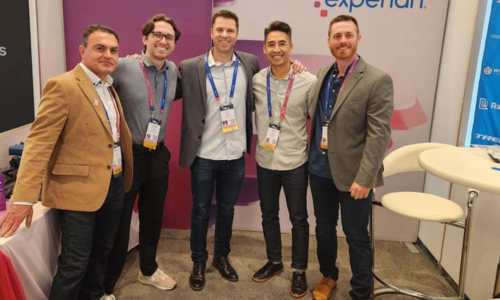
If there’s one place where the fraud and payments world comes together to compare notes, challenge assumptions and swap real-world strategies, it’s MRC Vegas. With more than 2,000 professionals, innovators and industry leaders in attendance, this year’s event was packed with energy and even bigger ideas about where digital commerce is headed.
From emerging fraud threats to next-gen payments technology, the conversations were practical, tactical, and focused on driving measurable results. Whether you’re a merchant fine-tuning your fraud strategy or a payments leader looking to stay ahead of rapid change, MRC Vegas 2026 proved once again why it’s the place to be.
This year, Experian’s Jeff Meisser was on the ground in Las Vegas, engaging in conversations with merchants, partners and industry leaders. Here are the themes, challenges, and opportunities that stand out most.
A more collaborative industry is taking shape
The dominant theme this year was clear: collaboration is no longer optional. It’s essential.
Across sessions and side conversations, there was a noticeable shift in how organizations are approaching fraud. Merchants, technology providers and even competitors are increasingly working together, sharing insights and aligning strategies to address common challenges.
This was especially evident in industries like travel and retail, where fraud patterns are evolving quickly, and attackers are targeting similar vulnerabilities. Rather than operating in silos, organizations are recognizing that collective intelligence is one of the most effective tools they have. At the center of these conversations was a shared understanding: fraud is constantly changing, and keeping pace requires a more connected, ecosystem-driven approach.
Key takeaways from MRC Vegas
1. Solving fraud requires industry-wide alignment
One of the most notable shifts was the willingness of competitors to collaborate in addressing shared fraud challenges. Account takeover (ATO) and fraudulent account creation continue to rise, with fraudsters increasingly targeting both new and existing accounts. These attacks are scaling rapidly, fueled in part by automation and AI, making it difficult for any single organization to keep up alone. Industry estimates show account takeover attacks have surged dramatically in recent years, reinforcing the urgency of a more unified defense. For merchants, protecting the customer journey now requires broader visibility and cooperation across the ecosystem.
2. The rise of partnership driven fraud prevention
Another strong theme was the growing demand for partnerships over standalone solutions. Many organizations are moving away from point solutions and toward integrated platforms that combine data, analytics and decisioning across multiple providers. At MRC, there was a noticeable increase in partners actively seeking to collaborate, recognizing that stronger outcomes come from connected capabilities.
This shift reflects a broader evolution in fraud prevention. As threats become more complex, merchants need solutions that work together seamlessly, enabling faster decisions and more consistent protection across the customer lifecycle.
3. AI moves from hype to reality check
AI remained a major topic of conversation, but with a more grounded perspective than in previous years. On one hand, fraudsters are already leveraging AI at scale, particularly for mass account creation and increasingly sophisticated attacks. On the other hand, many merchants are still working through how to deploy AI effectively within their own environments.
The focus has shifted from experimentation to execution, specifically, how to use AI responsibly, accurately and at scale. Many organizations are seeking guidance on how to operationalize AI in a way that strengthens defenses without introducing new risks. This gap between offensive and defensive use of AI remains a concern, underscoring the need for continued innovation and collaboration.
MRC Vegas 2026 made one thing clear: the fraud landscape is becoming more complex. However, the industry’s approach to solving it is becoming more unified. As fraudsters continue to evolve, so must the strategies used to stop them. Collaboration, partnership and smarter use of data will define the next phase of fraud prevention.
And if this year’s event is any indication, the industry is ready for it. Interested in speaking to a data expert on how we can help solve your fraud pain points? Get in touch today!